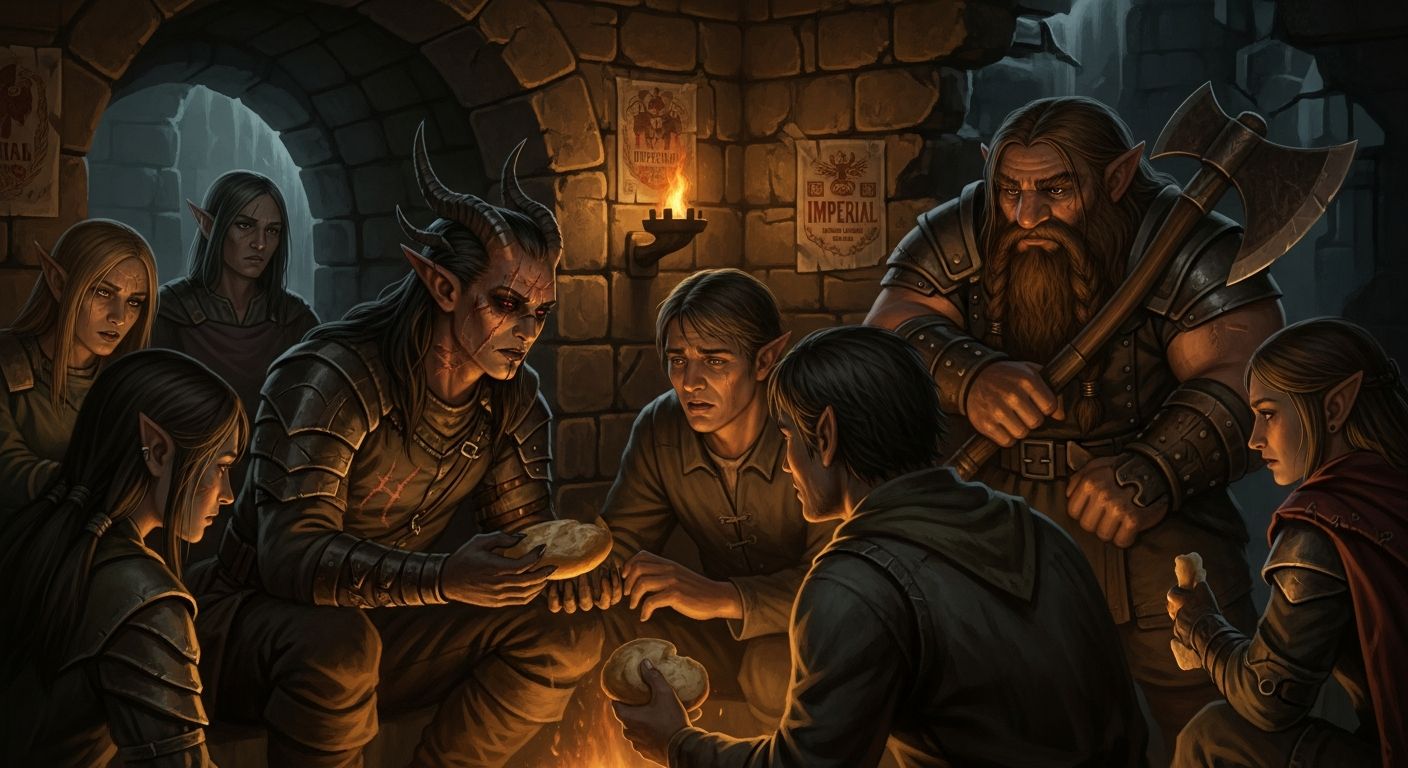
The arrival that followed the Shattering brought more than just monsters; it brought the “Others”—the sentient races who were ripped from their home planes and stranded in Ethoria. Originally, this was a world of humans only, a place of mundane physics and simple mortality. Now, it is a forced melting pot of displaced species, each grappling with the trauma of a stolen history. The Elves are no longer graceful immortals of starlit woods, but haunted refugees whose longevity has become a curse, forcing them to watch the slow, inevitable decay of a world that is not their own. Their cities are gone, their gods silent, leaving them as wandering ghosts in the Imperial machine.
The Dwarves, once masters of subterranean kingdoms, have been repurposed by the Empire’s insatiable need for defense. They have abandoned the memory of gold and glory to become the architects of survival, building the massive, brutalist fortifications that hold back the horrors of the rifts. Their craft is no longer one of beauty, but of war—cold iron and grey stone designed to withstand siege, not to inspire awe. In the mines of the Blackreach Highlands, they delve not for treasure, but for the raw materials of resistance, their culture hardened into a grim pragmatism that mirrors the stone they shape.
For those whose forms are more overtly alien, life is even harsher. Tieflings and Dragonborn are viewed with deep, institutionalized suspicion, often relegated to the edges of society or forced into the Valoric Marches as expendable shock troops. Their exotic natures serve as a constant, living reminder of the alien worlds that bled into this one, making them targets for both the Inquisition’s scrutiny and the populace’s fear. A Dragonborn’s breath or a Tiefling’s shadow is not seen as a wonder, but as a potential Anomaly—a threat to be managed, regulated, or extinguished if necessary.
Under Imperial law, there is no racial harmony, only a tense, pragmatic coexistence enforced by the iron necessity of survival. The state categorizes all races by utility, stripping away culture in favor of function. A Halfling is valued only for their nimble work in the rigging of the Azure Archipelago’s ships; a Half-Orc is prized solely for their shock labor in the glass-mines of the Gilded Wastes. Old traditions are dying, strangled by the unified, grim culture of the Empire. Yet, in the quiet, rebellious corners of the world, whispers of the old ways persist—fragments of songs, prayers to dead gods, and the desperate hope that one day, the Others might find a way home, or at least carve out a place in this broken world that feels like one.