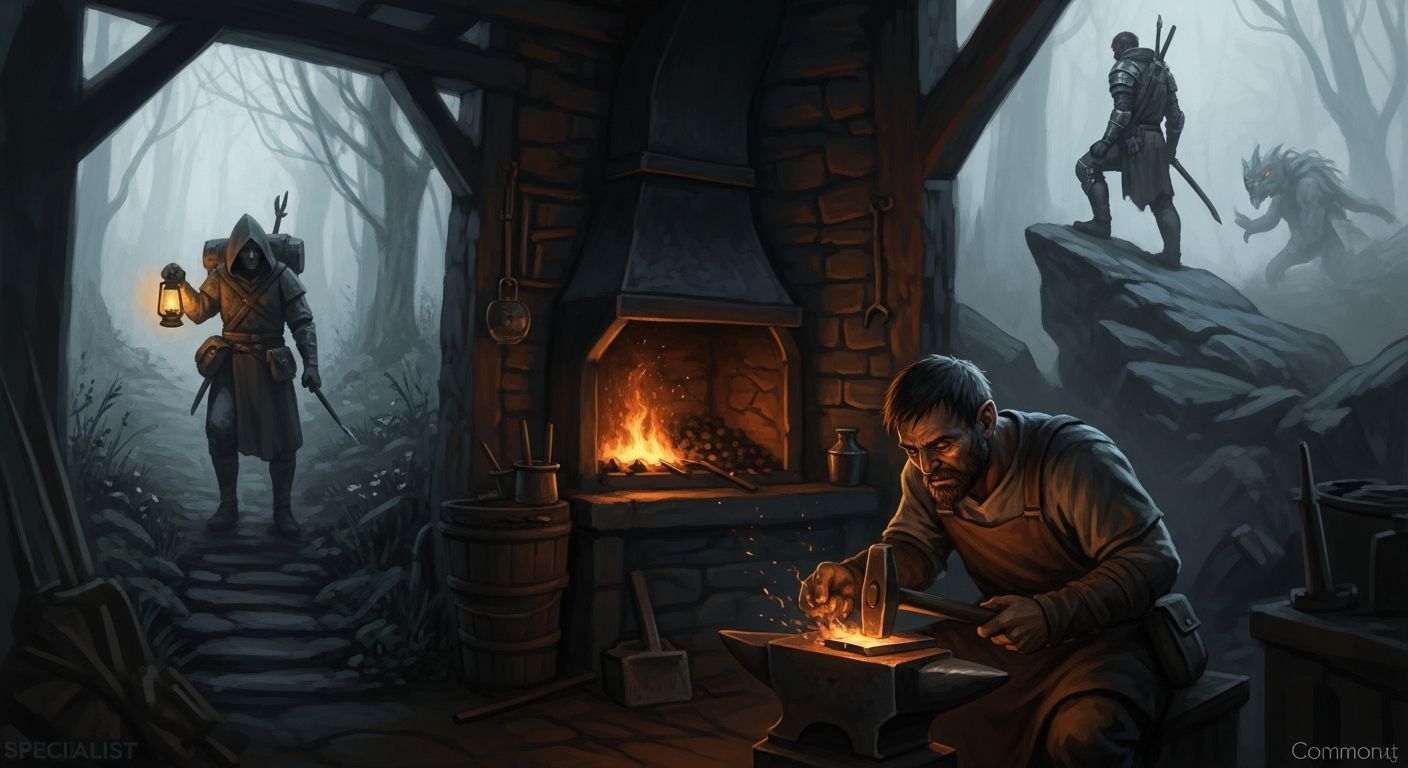
In Ethoria, one’s “Way of Life” is not a career choice but a survival strategy. The vast majority of the population are Commoners, the gears that keep the Imperial machine turning. They are the Embedded: bakers who use enchanted yeast to feed garrison towns, smiths who forge cold iron to repel the fey, and laborers who maintain the crumbling aqueducts of the Heartlands. Their lives are defined by routine, endurance, and the constant fear of being deemed “non-essential” by the state. They live in the shadow of the walls they build, finding quiet rebellions in the preservation of family, tradition, and the small, safe magics that the Inquisition overlooks.
However, the world is too broken for everyone to stay behind walls. Specialists are those whose skills force them into the margins—the Solitary Commoners who navigate the dangers of the wild. These are the guides who know which moss in the Duskfall Morass is safe to eat, the “Void-Caravaneers” who drive armored wagons through Anomaly zones, and the scavengers who risk the edges of the Wastes for salvage. They are often viewed with a mix of respect and suspicion; they are necessary for trade and communication between the isolated regions, yet their exposure to the outside world leaves them “tainted” in the eyes of the rigid Imperial order.
For those who possess power beyond the mundane—the “Exceptional”—life is a dangerous balancing act. A sorcerer or a warrior with supernatural gifts is not a hero in Ethoria; they are a weapon to be registered or a threat to be neutralized. Many hide their abilities, living as commoners until a crisis forces their hand. Others, the Survivalists, reject society entirely, living in the deep wilds where the Empire’s law cannot reach, trusting in their own prowess to survive the monsters and the elements. Whether one is a hum